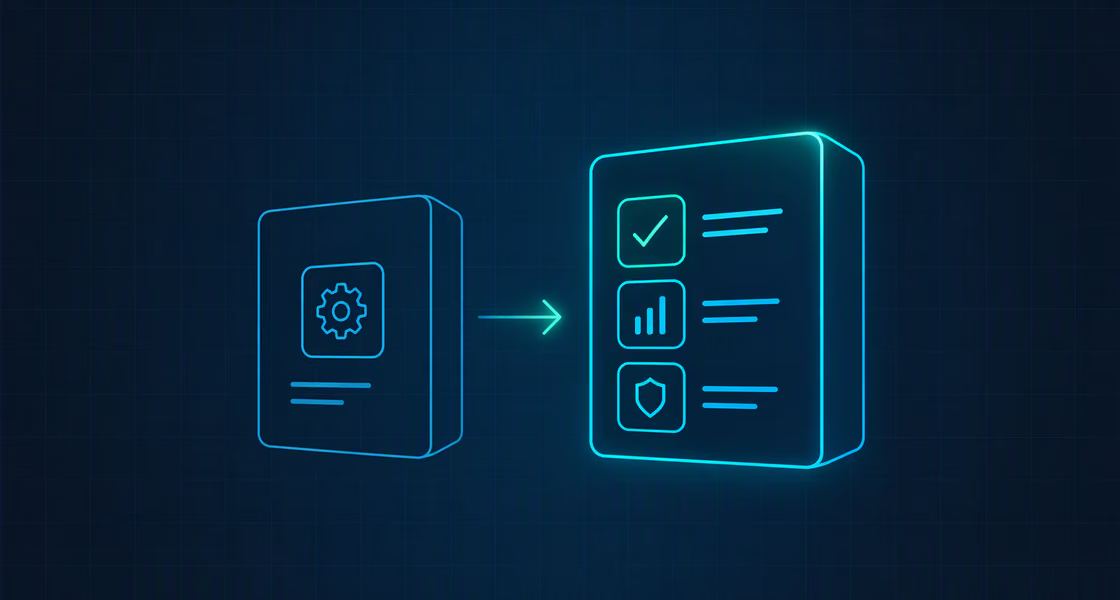
MVP vs MMP in short: an MVP (Minimum Viable Product) is the smallest version that lets you test whether an idea solves a real problem, usually with a few early users. An MMP (Minimum Marketable Product) is the smallest version you can sell: it has fewer features than the final product, but enough quality and value that customers pay for it.
| MVP | MMP | |
|---|---|---|
| Asks | Does anyone need it? | Will anyone pay? |
| Users | Early testers | Paying customers |
| Quality | Enough to learn | Enough to sell |
| Example | A clickable prototype or one workflow | First release with billing and support |
| Next | Learn and decide | Launch and extend |
Are you thinking about a product idea? Or even an idea for an app?
We would rather not discourage you, but hundreds of companies have ideas for the next must-have app.
To ensure the success of your idea, it is crucial to test it as early as possible. After all, who wants to invest vast sums of money in developing a product that doesn’t go well with the target group?
Tech companies, in particular, have, for years, relied on the development of so-called MVPs (Minimum Viable Products) and MMPs (Minimum Marketable Products) to test ideas. A prominent example is provided by the founders of Airbnb, who first built a simple website with photos of their flat and thus found their first paying customers.
If you have an idea for a (digital) product, it is worth knowing about the purpose of MVPs and MMPs and their various definitions, Valudio are here to give you the low down.
What is an MVP (Minimum Viable Product)?
A Minimum Viable Product (MVP) is used to test a hypothesis about end-user needs: does the product at hand satisfy user needs or not?
The MVP validates or falsifies a product idea early in the product development cycle and helps iterate and improve the product idea based on user feedback.
Eric Ries, founder of the Lean Startup Method, defines an MVP as the product version that enables the development team to collect a maximum of validated results with the least effort.
“An MVP is a version of a new product which allows a team to collect the maximum amount of validated learning about users, with minimal effort.”
Eric Ries, founder of the Lean Startup method
Thus, MVP is a sub-concept of the Lean Startup method, which Eric Ries described in his 2009 book “Lean Startup”, intended to shorten product development cycles.
The MVP plays a central role in agile software development since agile work is based on validating and iterating products based on user input.
Ultimately, the MVP answers whether end users would buy a product. However, the MVP is never a final product; it only simulates the capabilities of the final product. For example, an MVP can also be a digital product that only pretends to automate a process while manual processes are still being carried out in the background.
What does ‘Minimum Viable’ mean?
A balance between product viability and minimalism characterizes the Minimum Viable Product. It combines both qualities in equal measure.
‘Minimum’
A minimum product fulfills the basic needs of its end users.
‘Viable’
A viable product works for its end users.
A Minimum Viable Product covers the most essential needs of its end-users but nothing beyond that. Therefore, the MVP development process focuses on what a product does rather than how a product does something.
Minimum Viable Products can be anything: a hypothesis of the product idea, a written or visual wireframe, or a simple digital product. The goal of the MVP is solely to allow the first users to test the concept and validate the underlying idea.
What is an MMP (Minimum Marketable Product)?
A Minimum Marketable Product is a product that meets the minimum requirements for market launch. It is the evolution of the MVP and is developed when it is already clear that there is a need. The user experience is further developed with the help of the early adopters of the MVP in the MMP to such an extent that the final target group accepts the product.
What are the benefits of an MVP?
The business benefits of a Minimum Viable Product are:
- quick time to market (and a possible competitive advantage)
- cost-effective testing of business ideas
- collecting data on target group/customer preferences at an early stage
- early development of a customer base (also called early adopters) and a network who feel involved in product development (creating potential brand ambassadors)
- investors are attracted by a functioning MVP and are presented with a tangible value within the MVP
Just as you would calculate the Return on Investment (ROI) of custom software development , with an MVP, insights into the success of a product can be predicted, and potential improvements can be identified even before actual money flows into the production of the final product or a complete product version. The sooner developers find out whether a product will please and benefit end customers, the less effort and costs will have to be spent on a product that fails to succeed.
The MVP allows developers to drastically change or abandon the product based on the feedback gathered. This process is also called ‘validated learning’. Companies can avoid the trap of working on a product that no one ends up using, reduce implementation costs, and avoid capital losses.
What are the disadvantages of an MVP?
Disadvantages often occur when an MVP is misunderstood as a pre-product with the most miniature possible set of functions or half-finished functions. In this form, no meaningful or, in the worst case, only misleading insights can be gained. The MVP is then simply not of high enough quality or, in other words, not viable enough to logically evaluate the end-user experience.
On the other hand, it should also be avoided to develop a fully-fledged end product. Note: a Minimum Viable Product is not a final product.
It is best to create a list of MVP functions and then narrow them to a minimum. Which steps do users have to go through to get added value? Which steps can be dispensed?
Other common obstacles to the development of a successful MVP
Ignorance of market research
Companies frequently need help to abandon their original idea when the insights gained from the MVP testing phase push them to do so. Ignoring market research and survey results and not wanting to deviate from the original idea only promises success in the fewest cases and can quickly become expensive.
Skipping the prototyping phase
Prototyping is an essential step in the development of an MVP. In this phase, the basic structure of the product is defined, and sketches and an interface architecture (for example) are created. Confusion and communication problems can arise in the later development work without doing this preliminary work.
The wrong development team
Companies should look for a development team they trust. An inexperienced team can derail even a unique and viable product idea! The development team should always see itself not only as a technical or executive team but should also be able to communicate with the client at eye level. Most projects fail not because of the technical implementation but because of team communication.
An example from Valudio’s own work: the MVP for the language-learning platform Lingoda.
When should you go for an MVP?
“You don’t necessarily have to build an MVP before you go into the actual product development and build a minimum marketable product. You should always be aware that the main thing here is to recognize your product development phase. If the product is nothing more than an idea so far, it is advisable to validate its assumptions in an MVP phase.
You don’t necessarily have to develop a product for this. For this phase, you should use as few resources as possible. If you are sure there is a need for the software product, it’s also possible to go straight into product development and create a product roadmap based on which an MMP will be developed. At Valudio, we specialize in just such a scenario.”
Mischa Herbrand, CEO, Valudio
The development and release of a Minimum Viable Product is worthwhile for companies if:
- A product is to be brought to market as quickly as possible using a concierge approach.
- A product idea is to be tested on real people before a large budget is allocated for the full development of the product, using a Dropbox approach.
- The MVP determines what works and doesn’t work with the target audience and ensures that it includes enough features.
Before you start, you should definitely make sure that your MVP aligns with the company’s goals. Some concrete questions to consider in advance are:
- Have all the assumptions of my problem to be solved been identified and listed?
- Can I validate my assumptions without developing an MVP?
- Have I talked to all the people involved who might have insights into my problem to solve?
- Does the company have sufficient resources to develop an MVP with enough features?
And the final question should always be: is now the right time to develop an MVP?
Can you answer all the above questions positively, and do you know exactly which issue of the user persona the MVP is supposed to solve? Do you know how your MVP should differ from those of your competitors? Then nothing stops you from developing your Minimum Viable Product, i.e., your product in its beta version.
Do you have a product idea?
We have experience in designing MVPs and MMPs
How does the Minimum Viable Product (MVP) become a Minimum Marketable Product (MMP)?
How much time, work and costs go into the further development of the MVP depends on where you are:
| Stage | What the MMP still needs |
|---|---|
| Mockup | Turn the core offering into a product: better interfaces, first user feedback, an improved user interface |
| MVP | If one core feature already works: a better user experience and a sharper focus on customer needs |
| MLP | Usually a few refinements: a Minimum Lovable Product already has the functions and usability users love |
| EVP | Nothing: an Exceptional Viable Product is almost finished and can go to market directly |
“MVP and MMP are used more in the field of new product development, where the aim is to sell a product later or to build a new business.”
What else do you need to convert an MVP into an MMP?
First, an MMP should be intuitive to use. To achieve this, companies should rely on experienced UI/UX designers who optimize the frontend (=user interface) of the landing page for use by end customers. Additional features and new features that distract from the product’s primary function and the business model should be removed to avoid creating unnecessary confusion among users about the purpose of the product. Implementing the feedback collected on the MVP in the MMP is equally essential.
In the case of applications that are developed to digitalize internal company processes or to improve the customer experience of an already existing product, the development of the final product can be started immediately. However, the applications must still be tested on all future user groups and discussed with them to design the best possible solution.
Frequently asked questions
Is an MVP the same as a prototype?
No. A prototype shows how a product could look or work and is often thrown away. An MVP is used by real users so that a team learns whether the idea solves their problem; it can be as simple as a prototype, but it has to be put in front of users and measured.
How long does it take to build an MVP?
It depends on how much has to work for real. A clickable prototype can be ready in days, a software MVP with one working workflow usually takes weeks rather than months. If an MVP takes as long as the final product, it is no longer minimal.
When should an MVP become an MMP?
When the MVP has shown that users need the product and the open question changes from “does anyone need this” to “will anyone pay for this”. At that point quality, onboarding and support matter, and the feedback from the MVP decides which features the MMP keeps.
What is the difference between an MMP and an MLP?
An MLP (Minimum Lovable Product) aims for a first version users enjoy using, not only one that works. An MMP is defined by the market: the smallest version customers are willing to pay for. An MLP is often a step on the way to an MMP.
Planning an MVP?
Valudio builds MVPs so they can grow into the marketable product without starting over. Tell us about the idea and the users you want to test it with.
Talk about your MVP